Every electric scooter, e-rickshaw, e-bus and e-truck runs on one heart: the traction motor. Today, a big share of these motors, or their key parts, still come into India from outside. That is now changing. In September 2026 the Government of India made it clear that traction motors for e-buses and e-trucks must be made in India, step by step, by April 2027.
In this article we explain, in simple words, why localising traction motors is hard, why most companies still import, what the Government is doing, who is already investing, and how a lamination partner like SNV fits into this journey.
What is a traction motor, and why is it special?
A traction motor is the motor that turns the wheels of an electric vehicle. It is not like a fan motor or a pump motor that runs at one speed all day. A traction motor must give high torque at start, run at very high speed on the road, stay cool, and work for many years with no failure.
Inside every traction motor there is a stator and a rotor. Both are made by stacking hundreds of thin steel sheets called laminations. Most traction motors also use strong magnets in the rotor. The motor is only as good as these parts. If the laminations have burr, poor profile or uneven stack height, the motor runs hotter, loses efficiency and makes more noise.
What the Government has done
The Government is pushing localisation from many sides:
- PM E-DRIVE localisation rules: On 3 September 2026, the Ministry of Heavy Industries issued notifications under the Phased Manufacturing Programme of PM E-DRIVE. For e-buses, rotor and stator assembly, bearing, enclosure, connector and cable fitment must be done in India. From 1 April 2027, magnet and shaft fitment, and the motor controller and inverter, are added. For e-trucks, the full traction motor (magnet, rotor, stator, shaft, bearing, enclosure) must be made in India from April 2027. (ANI, TrucksBuses)
- Deadline already moved once: Earlier in March 2026, the traction motor deadline was pushed by six months to 1 September 2026, because of supply chain problems and magnet export curbs. Industry body SIAM has asked for more time again. This shows how hard the change is. (Mercom India, Times EV)
- Rare earth magnet scheme: On 26 November 2025, the Union Cabinet approved a Rs 7,280 crore scheme to build 6,000 tonnes a year of rare earth permanent magnet capacity in India, to cut dependence on imports. (The Tribune)
The pain point: why most OEMs still import
If localisation is good for the country, why do so many vehicle makers still buy imported motors? From our talks with motor makers, the answer is simple: cost and risk.
A good traction motor needs very high accuracy. The air gap between stator and rotor is small. The slot profile must be right. Burr must be very low. Stack height and skew must be the same in every piece. To get this, you need costly press lines, good tools, good steel and strong quality systems.
All this cost comes down only when volume goes up. A supplier abroad who makes lakhs of motors every year can spread the tool and machine cost over a huge volume. In India, each OEM's volume is still small and split across many motor sizes. So the first local motors look costly on paper, and buying imported motors looks like the safe and cheap choice.
Root cause: breaking the big problem into small parts
In TPS problem solving (the PDCA way), we do not attack a big problem as one block. We break it into small parts and find the root cause of each. When we do this for traction motor localisation, five root causes come out:
- Low volume per design: Many motor designs, each with small quantity, so tool cost per piece stays high.
- Import habit: OEMs buy a complete motor from one supplier abroad, so local part makers never get a chance to prove themselves.
- Magnet dependence: Rare earth magnets are mostly imported, and supply can stop when export rules change.
- Thin, high-grade steel: Traction motors need thin CRNO electrical steel, often 0.35 mm, which is harder to stamp accurately than thicker sheet.
- Trust in local quality: Buyers worry that a new local supplier cannot hold tight limits batch after batch.
Solutions: one root cause at a time
Each root cause has a practical answer:
- For low volume: Use common lamination designs across motor ratings, and change only the stack height. One tool can then serve many motors.
- For import habit: Localise part by part. Start with laminations, shafts and housings, then stator and rotor assembly, then the full motor. This is exactly how the PM E-DRIVE rules are phased.
- For magnet dependence: Support the new Indian magnet makers, and look at magnet-free designs. Ola Electric has got Government test certification for an in-house ferrite motor with no rare earth magnets (Energetica India).
- For thin steel: Use a rigid, accurate press and a servo feeder that can handle 0.35 mm sheet without damage.
- For trust: Work with suppliers who run a clear quality system, measure every critical point and share the data with you.
Who is already investing in traction motors in India
Several companies have already started. A few examples:
- Sona Comstar makes traction motors for two- and three-wheelers, and has tied up with UK-based Equipmake to make high-voltage motors and inverters for cars, buses and commercial vehicles in India (Autocar Professional).
- Uno Minda formed a joint venture with Germany's Buehler Motor to make traction motors for electric two- and three-wheelers (Autocar Professional).
- Ola Electric has developed its own rare-earth-free ferrite motor in India (Energetica India).
- Dana set up a facility in Pune to make Dana TM4 electric motors and inverters for buses and trucks (FleetOwner).
Every one of these motors needs stator and rotor laminations, in large numbers and with tight quality. That is where the Indian supply chain must be ready.
The next 10 to 15 years
We strongly believe that the Indian motor industry will stand on self-reliance in the next 10 to 15 years. The Government rules, the magnet scheme and the new investments all point the same way. Volume will grow as more e-buses, e-trucks and two-wheelers come on the road. As volume grows, local cost will come down, and India can design and build its own motors instead of depending on outsiders. Companies that build local capability now will lead that market.
How SNV can help
SNV Stamping Solutions is an emerging stator and rotor lamination provider in Machohalli, Bengaluru. We are a completely new setup, run with strong Toyota Production System and lean manufacturing practice.
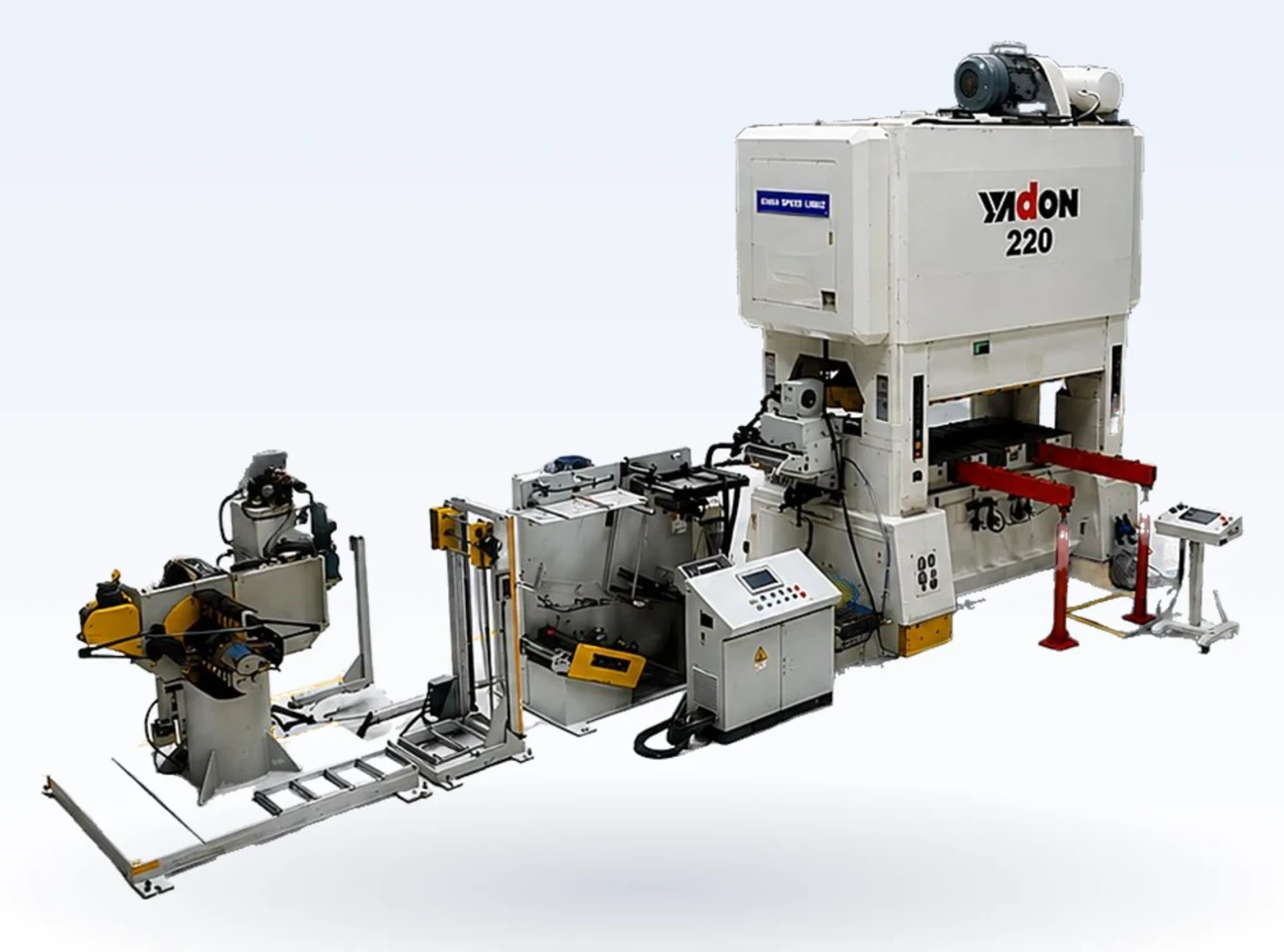
- A 220-ton Yadon high-speed press line with a double plunger design, which keeps the tool parallel to the bolster for high accuracy and low burr.
- A Yaskawa servo feeder with decoiler and straightener, able to feed thin 0.35 mm CRNO sheet accurately for better motor performance.
- Laminations from 20 mm to 300 mm diameter, in CRNO electrical steel from 0.35 to 1.0 mm.
- Capacity of 150 to 170 tonnes a month, with 7 to 15 days lead time.
- ISO 9001:2015 certified, with a team experienced in automotive press shops.
If you are planning to localise your traction motor, or any BLDC motor, send us your drawing. We will study it and give you a clear quote. Call 9980668620 / 9980717774, email contact@snvstampings.com, or visit www.snvstampings.com.