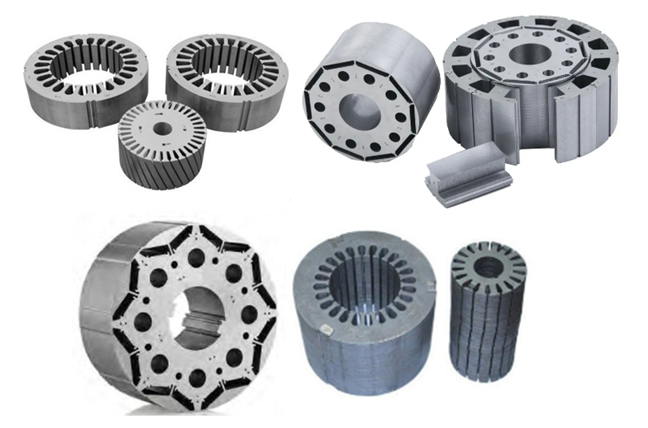
Drone motors are named with four digits like 2207 or 4114, plus a KV number. Many buyers pick a motor only by KV and then wonder why it overheats. This page explains the numbers in simple words, gives a size chart for every class of drone, and shows how to pick the right one. It is part of our complete drone motor guide.
How to read a drone motor name
| Code | Meaning | Example |
|---|---|---|
| First two digits | Stator diameter in mm | 22 in 2207 = 22 mm |
| Last two digits | Stator stack height in mm | 07 in 2207 = 7 mm |
| Larger motors | Often three + two digits, or a class number | 12020 ≈ 120 mm stator, 20 mm stack |
| KV | No-load rpm per volt | 1750 KV × 22.2 V ≈ 38,850 rpm |
| 12N14P | 12 stator slots, 14 magnet poles | Most common in small drone motors |
Stator volume (diameter² × height) roughly tells you how much torque and power the motor can make. KV only tells you how fast it wants to spin per volt.
Drone motor size chart
| Stator size class | Typical drone | Propeller | Typical KV | Battery | Max thrust per motor (approx.) |
|---|---|---|---|---|---|
| 08xx – 11xx | Tiny whoops, indoor drones under 100 g | 31–65 mm, 2" | 8,000–19,000 | 1S–2S | 40–200 g |
| 13xx – 14xx | 3-inch micro FPV | 3" | 3,000–5,000 | 3S–4S | 300–600 g |
| 22xx – 23xx | 5-inch FPV, small strike drones | 5" | 1,700–2,700 | 4S–6S | 1.2–1.8 kg |
| 28xx | 7-inch long-range FPV | 7" | 1,100–1,500 | 6S | 2–2.5 kg |
| 35xx – 41xx | Mapping / survey quads, 1–3 kg | 10–15" | 300–700 | 4S–6S | 1.5–3.5 kg |
| 50xx – 62xx | Industrial, inspection, small delivery (3–8 kg) | 15–22" | 170–350 | 6S–12S | 3–7 kg |
| 80 mm class | Delivery, 10 L agri | 24–32" | 100–170 | 12S | 6–12 kg |
| 100–120 mm class | 16–30 L agri, cargo, heavy-lift | 32–48" | 60–110 | 12S–14S | 12–30 kg+ |
(Typical ranges compiled from common market practice. Each motor maker's data differs — always use the maker's thrust-stand table for final design.)
Step-by-step sizing (with an example)
- All-up weight (AUW): a mapping quadcopter with camera and battery = 2.0 kg.
- Thrust target: 2 : 1 → 4.0 kg total → 1.0 kg per motor at full throttle.
- Propeller: bigger, slower propellers hover more efficiently. Frame allows 12-inch.
- Battery and KV: 6S (22.2 V). For a 12-inch prop the motor should hover near 4,500–5,500 rpm → KV around 400–500.
- Stator: from the chart, a 35xx–41xx class motor fits.
- Frequency check: 14 poles at 5,000 rpm → 5,000 × 7 ÷ 60 ≈ 580 Hz.
- Lamination: at ~580 Hz, 0.20–0.27 mm CRNO gives a cooler motor than 0.35 mm.
- Test: on a thrust stand, check grams per watt at hover throttle and temperature after 10 minutes of hover.
Pain points from wrong sizing
- Motor runs hot and loses thrust in long hover.
- Drone is heavier than needed because motors are oversized.
- Flight time far below the calculation.
- ESC or battery overheats because the motor draws high current.
Root causes
| Problem | Root cause |
|---|---|
| Motor hot in hover | Chosen by KV alone; stator too small for the propeller's torque. |
| Flight time low | Hover point far from the motor's best-efficiency zone; core loss ignored at high frequency. |
| Overweight drone | Oversized motors "for safety" without checking thrust-to-weight. |
| Motors behave differently | Stack height and lamination quality vary from batch to batch. |
Solutions
See how lamination thickness changes motor heat in drone motor lamination thickness, and how motor type affects sizing in outrunner vs inrunner vs frameless.
How SNV can help
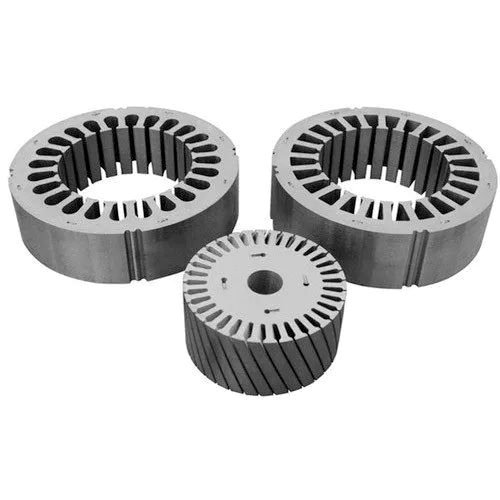
SNV Stamping Solutions Pvt Ltd is an emerging stator and rotor lamination provider in India, based in Bengaluru, with drone and defence motors as one of our focus areas. Our team brings 25+ years of automotive press-shop experience and runs the plant on Toyota Way discipline — TBP and PDCA.
- Brand-new 220-ton high-speed press line with a double-plunger design, parallelism within 50 microns.
- Servo feeder with decoiler and straightener for strip 0.2 mm to 1.0 mm thick, up to 400 mm wide.
- In-die auto stacking, auto skewing, separate cams for rotor and stator stack heights.
- Burr within 0.02 mm; stacking factor 97–98%; CRNO silicon steel for all BLDC and drone motor work.
- In-house CNC turning of rotor shafts — accuracy 10–15 microns, concentricity within 30 microns.
- Prototypes, quick die change, in-house die maintenance. ISO 9001:2015 certified; IATF 16949 implementation started in 2026.
"We don't just press parts — we are a solution provider for motor laminations of your design."
Need stator stacks for your motor size? Send us your drawing.
Send us your stator and rotor DXF or drawing, the motor's speed and pole count, and your target volume. We will suggest the steel grade and thickness for your frequency, review the design for punching, and come back with a prototype plan and quotation.
📧 contact@snvstampings.com | sales@snvstampings.com
📞 9980668620 / 9980717774
🌐 www.snvstampings.com
More in this drone motor series
Frequently asked questions
What does 2207 mean on a drone motor?
22 mm stator diameter and 7 mm stator height.
Is higher KV better?
No. KV only sets speed per volt. Large propellers need low KV and high torque; small propellers need high KV. Choose KV to match propeller and battery.
How much thrust should my drone motors have?
At least twice the all-up weight in total for most drones, 1.8–2.2 : 1 for heavy agri drones, and 5–10 : 1 for FPV racing and strike drones.
Which motor size for a 10 kg delivery drone?
With a 2 : 1 target and four motors you need about 5 kg thrust per motor, which usually means a 50xx–62xx class motor with 18–22 inch propellers, or a hexacopter with smaller motors for redundancy.