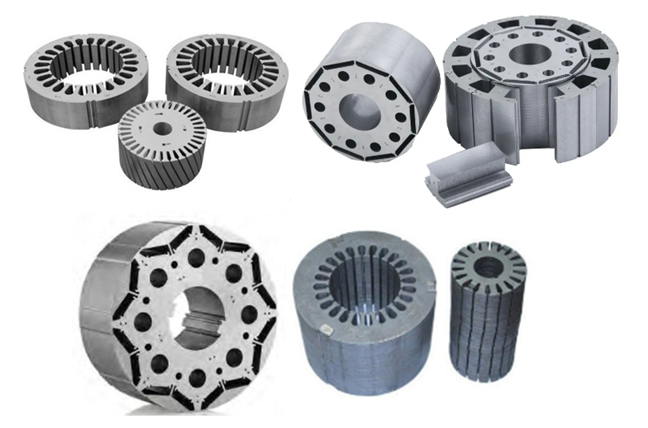
India now builds thousands of drones a year for its armed forces. But a drone is only as Indian as its motor. This guide looks at where India stands on drone motor localisation, why the motor is the weak link, and what a fully Indian motor supply chain needs. It is part of our complete drone motor guide.
The push for Indian drones
- India barred makers of military drones from using Chinese parts, applied through military tenders, because of worries that intelligence-gathering could be compromised.
- In March 2026 the Defence Ministry published a draft security framework requiring strict testing, secure-by-design builds and a 20-point check before clearance. The Army's AASHVAST lab screens drones and electronics for hidden hardware and firmware vulnerabilities.
- After Operation Sindoor, the government planned a ₹2,000 crore incentive programme covering drones, components, software and counter-drone systems, with a goal to make at least 40% of key drone parts in India by FY 2027–28.
- The Army Chief has said Army units themselves produced about 40,000 drones in FY 2025, and dedicated drone platoons are being formed.
- The Bharat Drone Stack platform lists 208 suppliers, including 83 start-ups, up from about 100 at its August 2025 launch.
Why the motor is the weak link
Assembly moved to India quickly. Components did not:
- From March 2022 to February 2023, India imported drone motors, sensors, batteries and cameras worth US$ 50–70 million; industry people estimate propulsion (motors, ESCs, power electronics) at nearly 40% of that component value.
- One Indian defence company has said that as much as 80% of the motors and controllers inside Indian military drones traced back to Chinese-origin channels, and that most domestic makers still assemble imported parts.
- Rare-earth magnets are a second chokepoint. China controls about 94% of permanent magnet production according to the IEA, and drones used 3,000–8,000 tonnes of rare-earth magnets in 2025.
What a fully Indian drone motor needs
| Part | India today | What is needed |
|---|---|---|
| Stator and rotor laminations | Press-shop skill exists from automotive and appliance industries | Thin-gauge, low-burr, small-diameter, multi-pole stacks with traceability |
| Electrical steel | CRNO capacity is growing; thin high-frequency grades mostly imported | Dual sourcing and safety stock of 0.20–0.27 mm grades |
| Magnets | Mostly imported | Local magnet making, recycling, or designs that use less rare earth |
| Copper winding | Available | Automatic winding for consistency |
| Shafts, bells, housings | Strong CNC base | Balancing and tight concentricity |
| ESC and firmware | Growing | Secure, Indian-owned code |
Pain points for defence drone makers
- Projects rejected or delayed when a foreign-origin part is found.
- Indian motor alternatives cost more or are not proven.
- Long lead times and sudden supply cuts from abroad.
- Low volumes per model make tooling costly.
Root causes
| Problem | Root cause |
|---|---|
| Foreign parts found late | No traceability below the motor level — steel heat number, magnet origin and stack maker not recorded. |
| Indian motors not proven | Few local suppliers have tested thin-gauge drone stacks; no shared test data. |
| Supply cuts | Single foreign source for flight-critical parts. |
| High tooling cost at low volume | Each drone model uses a different motor; no common stator families. |
Solutions
The last point matters most for cost: if three drone models share one stator diameter and only change stack height, one progressive die with stack-height control serves all three. See how stack height changes torque in our drone motor size chart.
How SNV can help
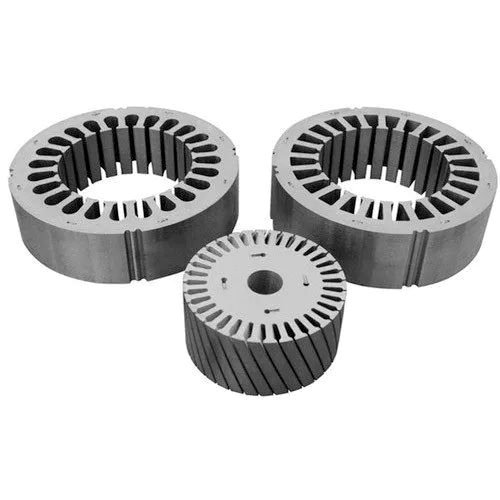
SNV Stamping Solutions Pvt Ltd is an emerging stator and rotor lamination provider in India, based in Bengaluru, with drone and defence motors as one of our focus areas. Our team brings 25+ years of automotive press-shop experience and runs the plant on Toyota Way discipline — TBP and PDCA.
- Brand-new 220-ton high-speed press line with a double-plunger design, parallelism within 50 microns.
- Servo feeder with decoiler and straightener for strip 0.2 mm to 1.0 mm thick, up to 400 mm wide.
- In-die auto stacking, auto skewing, separate cams for rotor and stator stack heights.
- Burr within 0.02 mm; stacking factor 97–98%; CRNO silicon steel for all BLDC and drone motor work.
- In-house CNC turning of rotor shafts — accuracy 10–15 microns, concentricity within 30 microns.
- Prototypes, quick die change, in-house die maintenance. ISO 9001:2015 certified; IATF 16949 implementation started in 2026.
"We don't just press parts — we are a solution provider for motor laminations of your design."
Localising a defence drone motor? Start with an Indian, traceable lamination source.
Send us your stator and rotor DXF or drawing, the motor's speed and pole count, and your target volume. We will suggest the steel grade and thickness for your frequency, review the design for punching, and come back with a prototype plan and quotation.
📧 contact@snvstampings.com | sales@snvstampings.com
📞 9980668620 / 9980717774
🌐 www.snvstampings.com
More in this drone motor series
Frequently asked questions
Are Chinese parts allowed in Indian military drones?
No. India bars makers of military drones from using Chinese parts, and a draft security framework published in March 2026 adds strict testing and a 20-point check before clearance.
What share of drone parts does India want to make locally?
Government plans target at least 40% local manufacture of key drone components by the end of FY 2027–28.
Which drone motor parts can India localise fastest?
Stator and rotor laminations, shafts, housings and windings, because India already has a strong press-shop and machining base. Magnets and thin high-frequency steel take longer.
Why does traceability matter for defence drone motors?
Because a part is only proven Indian if its steel coil, stack batch and magnet lot can be traced. Without records, foreign-origin parts are found late and projects get delayed.
Sources
- The Defense Post — India bans Chinese parts in military drones
- The Week — Indian drone component makers aim for the swadeshi switch (Nov 2026)
- The Week — The hidden weakness in India's military drones (Jul 2026)
- Outlook Business — India's drone dream still flies on foreign parts
- Outlook Business — ₹2,000 crore incentive and 40% localisation goal
- RealClearDefense — India's Drone Army (Jul 2026)
- S&P Global — Drones and rare-earth magnet demand